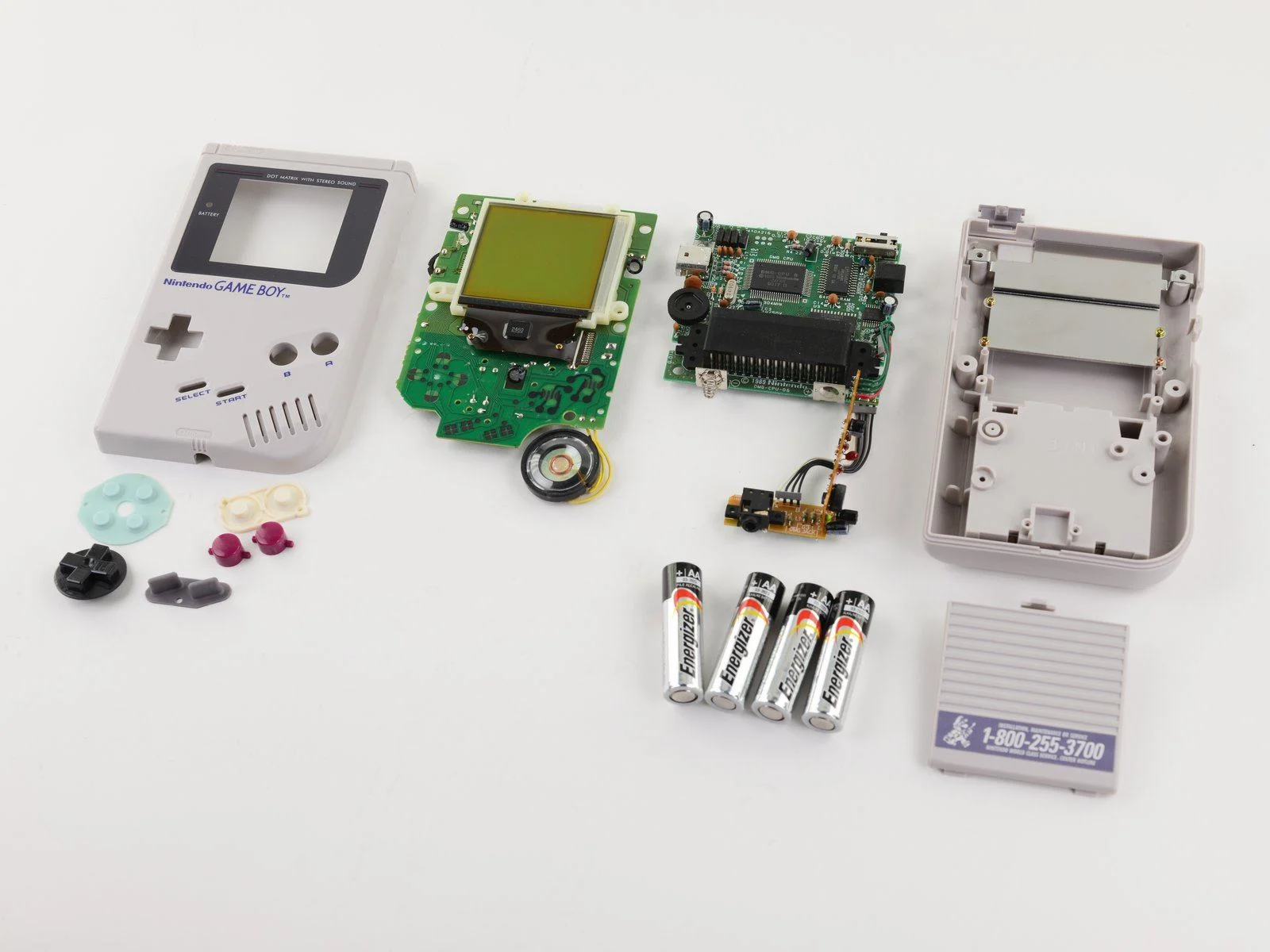
Teardown: Game Boy vs. Game Gear
The handheld with the worse screen won the format war.
Read spotlight →Guiding questionHow does product analysis and evaluation inform various stakeholders and aid in a product's future development?
Being able to say precisely identify what's wrong with something is a skill, and perhaps more rare than you'd think. Most criticism of products or processes stops at "this is annoying", which is valid, but not actionable. You may feel that a movie is boring, or a game isn't fun, or a subject is not interesting, but those feelings provide little information that can be used to improve things. Product analysis is the process of turning reactions into something specific enough to address and fix, and has been involved in nearly every improvement made to a product.
Constructive discontent is my favourite idea in this topic, partly for the name. It refers to the refusal to accept that things are simply the way they are, coupled with the discipline to explain what could be different. The tools and structure features, like SWOT, Porter's Five Forces, and reverse engineering, help to make that discontent systematic rather than random, on your own work and products designed by others. It can be challenging to find the flaws in something something you designed yourself, but developing that skill can help improve your work considerably.
Students must be able toDiscuss the purpose of a product analysis exercise and why it is important for product design development.
The main goal of product analysis and evaluation is to deeply understand how all the different parts and features of a product work together. We look at what makes a product functional (does it work well?), appealing (do people want to use or buy it?), and competitive (how does it compare to similar products?). Through this careful examination, we discover actionable insights we can use to make real improvements or develop new solutions. In simpler terms, product analysis helps you figure out: What makes this product work? Why do people use or buy it? And how does it stack up against the competition?
"Actionable insights" are specific, practical recommendations that can be implemented to improve the product. For example, a thorough analysis of an application might find that users rarely use a particular feature because they weren't aware of it, rather than avoiding it by choice. Simply looking at how many people use each feature can provide useful data, but to find actionable insights we'd have to look closer. (A specific example of this is MacOS quick actions. Do you use quick actions?)
Five analytical approaches used in product analysis:
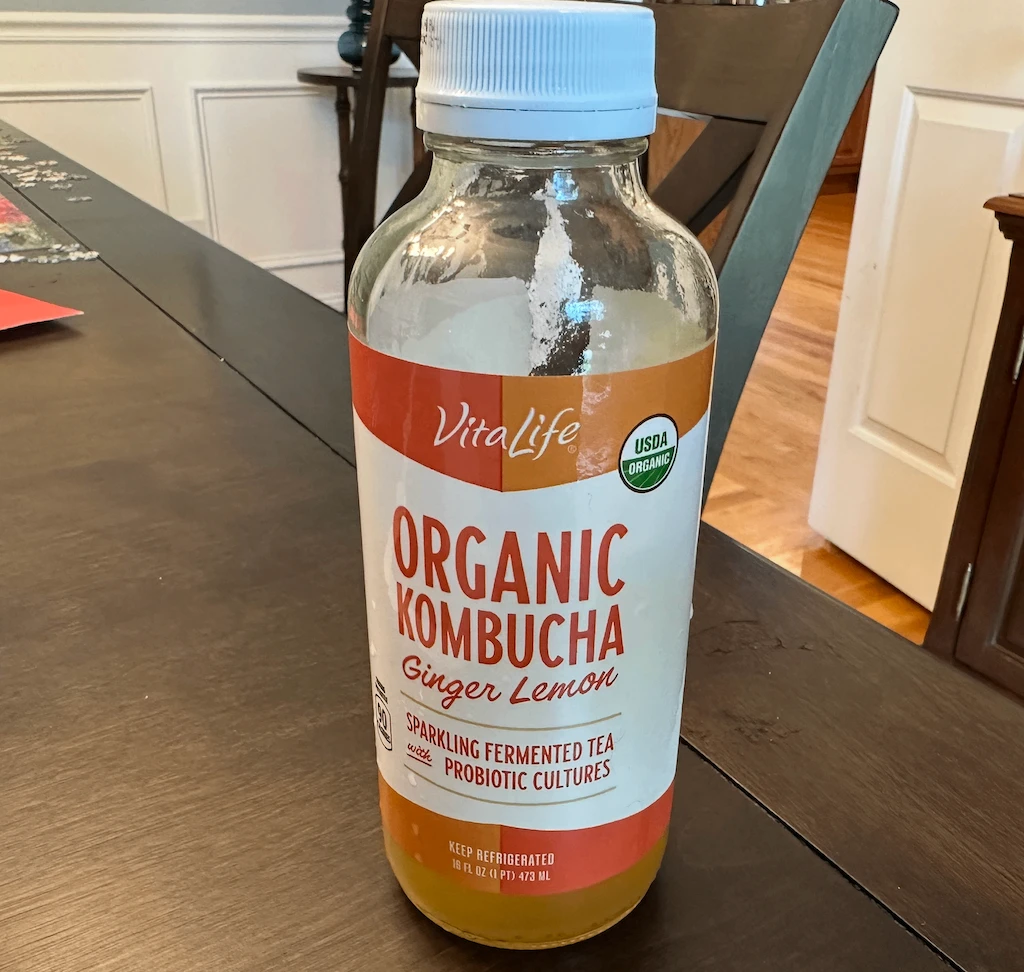
Product analysis enables designers to learn from successes and shortcomings, reexamine problems, explore new technologies, and iterate products into more appealing, user-aligned solutions.
Students must be able toIdentify the various stakeholders, such as users, manufacturers and engineers, that will help in any future development of a product.
Bringing a wide range of stakeholders into product analysis matters because something that feels obvious and easy to one group can be a genuine obstacle for someone else. Involving multiple perspectives ensures the final solution is technically refined, aesthetically pleasing, commercially viable, and broadly accessible.
A stakeholder is any person or group that has an interest in or is affected by the product. Involving them in the analysis process helps ensure that the final solution meets their needs and expectations. You are welcome to look up the specific history of the term 'stakeholder', but it isn't terribly interesting. I encourage my students to think of it as similar to 'shareholder' or 'partner', in that both of those terms refer to people who will benefit if a company or project succeeds.
| Stakeholder | Their contribution to product analysis |
|---|---|
| Consumers | share real-world-use feedback, such as how well the product works and how easy or difficult it was to use. They can share usability issues, express thoughts about the value of the product, and discuss their expectations. |
| Product Development Managers | Gather and process data from all relevant sources to assist in further product development. They can act as a bridge between different stakeholder groups. |
| Product Designers | Typically focus on product aesthetics, user experience, function, opportunities for innovation, and sustainability. They can also evaluate whether the product's form effectively communicates its function. |
| Engineers | Weigh in about whether the product is possible, and whether it would be more feasibile with different materials or revisions to manufacturing. |
| Marketing Staff | Review and analyse the market for the product, identifying trends, competion, pricing strategies, promotional opportunities, and where to sell. |
| Customer Support Staff | Listen directly to customers and provide information on recurring issues and potential areas of improvement. |
| Business Leaders | Above all focus on making sure the product delivers a return on investment, but also that it is in alignment with strategic goals, company values, and the approved project budget. |
Students must be able toAnalyse a product using a SWOT analysis based on function, performance, usability, features and materials.
A SWOT analysis is a structured framework with four quadrants. Strengths and Weaknesses are internal (within the product or organisation); Opportunities and Threats are external (from the market, technology, or regulatory environment).
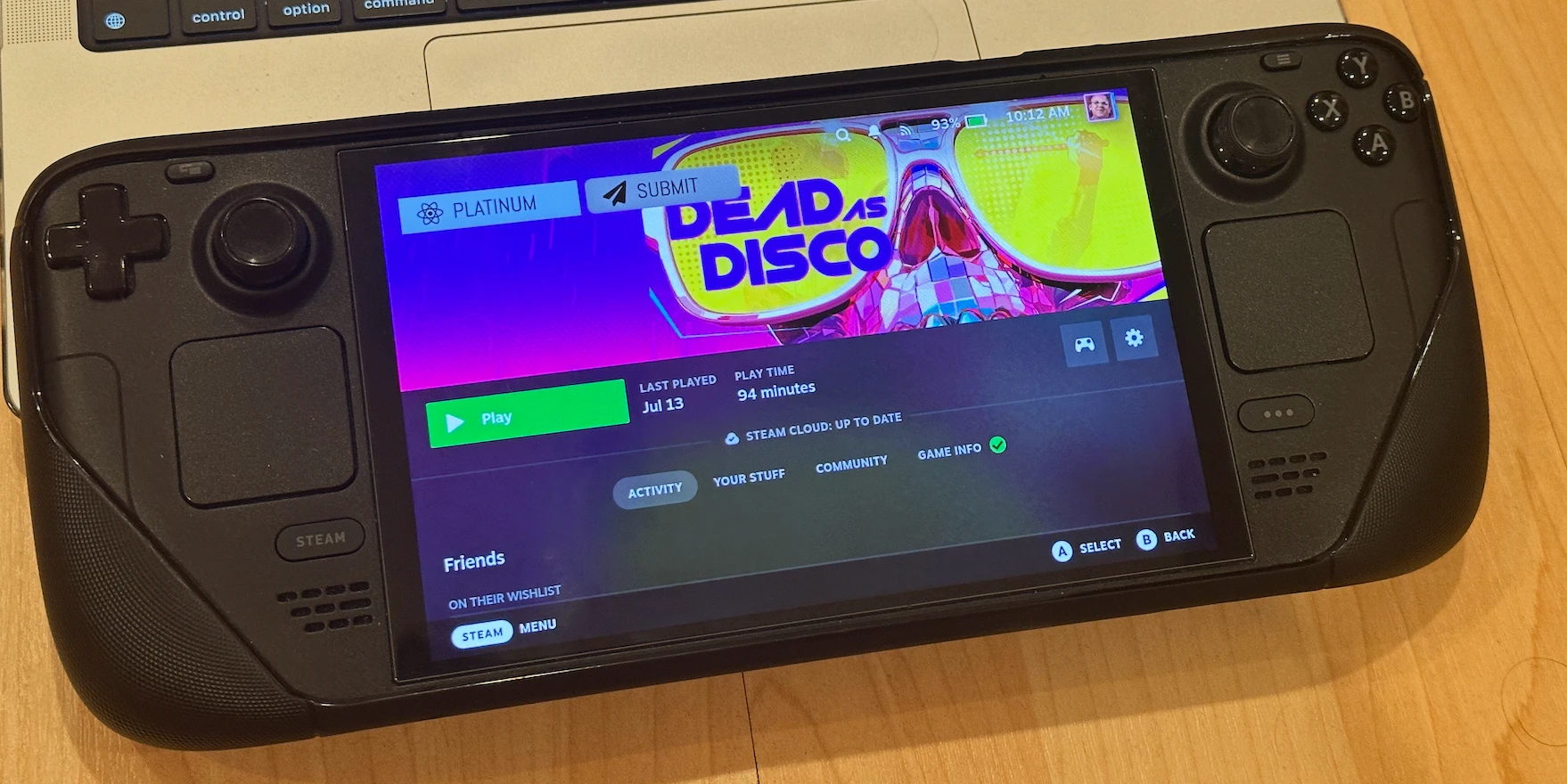
| Quadrant | Definition | Steam Deck Example |
|---|---|---|
| Strengths (internal, positive) | Valued features: aesthetics, functionality, technological superiority, brand reputation | "It just works!", seamless integration with Steam library, highly rated aesthetics and ergonomics |
| Weaknesses (internal, negative) | Limitations: resource constraints, pricing, intuitiveness, market placement | Aging hardware, directive to ensure device doesn't losemoney, lingering compatibility and launcher issues |
| Opportunities (external, positive) | Market trends, new technologies, growing segments | Growing demand for handheld devices and portability, large potential audience of parents and 'former hardcore gamers', massive catalog of games which can be optimized and marketed |
| Threats (external, negative) | Competitors, changing regulations, economic downturns, supply chain issues | Growing number of stronger handheld devices, memory and storage crisis, modern games require more and more power to run |
Let's imagine that we've opened a new restaurant called 'Pizza Dog' (Named after one of my first kitchen inventions) and want to do a SWOT analysis. My concept is a vegetarian pizza and hot dog restaurant, with video games and other entertainment, making it a blend of restaurant and hang-out zone.
| SWOT | Pizza Dog Analysis |
|---|---|
| Strengths | Unique menu, without competitors; strong brand identity; high quality ingredients; fun atmosphere |
| Weaknesses | Vegetarian food is less desirable to many customers; large numbers of delivery customers who don't form the same emotional connection as dine-in patrons; most offerings are best eaten 10-15 minutes after preparation, but many deliveries take 20-30 minutes to arrive |
| Opportunities | Develop menu items that travel better; provide packaging and free items that will help build connections with delivery-only customers; hang-out space can be used for events to bring in more customers |
| Threats | Menu can be copied and iterated on easily; more established competition could produce the same food at lower cost due to better deals with suppliers |
Porter's Five Forces (Michael Porter, 1979) complements SWOT by analysing competitive intensity at the industry level: (1) competitive rivalry, (2) supplier power, (3) buyer power, (4) threat of new entry, and (5) threat of substitution. While SWOT analyses a specific product, Five Forces analyses the whole industry.
Dumpalicious delivers hot dumplings by drone, straight to your window, in about six minutes. Twelve observations about the business are sitting in the bank. Drag each one into the quadrant where it belongs, or select it and then select a quadrant. Watch the axis labels: the trap in SWOT is putting an external factor in an internal quadrant.
Students must be able toUse data generated from relevant testing and/or reverse engineering to identify areas of the product that require improvement and to determine how well the product meets the needs of the user.
Systematic testing and reverse engineering generate objective data that replaces guesswork in product evaluation.
Testing methods:
| Test type | What it measures | Output |
|---|---|---|
| Usability testing | How easily users can operate the product; error rates; time-on-task | Identification of confusing interfaces, missing affordances |
| Performance testing | Whether the product meets specified functional requirements (speed, load, accuracy) | Pass/fail against specification; quantitative comparison to competitors |
| Materials testing | Tensile strength, hardness, fatigue life, corrosion resistance | Material suitability; predicted service life |
| Customer review analysis | Real-world issues reported by actual users at scale | Recurring pain points; issues that lab testing misses |
Reverse engineering as analysis (disassembly / teardown): Physically deconstructing a product reveals component materials, manufacturing processes, assembly sequence, and structural decisions. Used by designers to understand how a competitor solved a design problem, or to identify failure modes in their own product. (For the full reverse engineering process, see B4.1 Production Systems, objective 4.1.5.)
Benchmarking compares a product's performance, features, and design against leading competitors or industry standards. It equips designers with awareness of prevailing standards, emerging aesthetic trends, and potential avenues for market differentiation.
The handheld with the worse screen won the format war.
Read spotlight →Students must be able toCompare competing and similar products to identify opportunities for further product improvements.
The relationship between weaknesses and opportunities is central to iterative design. A weakness in one product is an opportunity for the next version, or for a competitor. A frequent modern example is 'battery life'. So many iterative products are advertised as having better battery life than their predecessors, or 'our longest lasting battery yet', and so on. Battery life is a great feature to mention for sales because people who have older devices, especially phones, may have few other issues with their device, but almost certainly have less battery life than they did when their device was newer. This table shows the capacity of all iPhone batteries, and makes a compelling case that 'battery life' has always been identified as a weakness
Three possible decisions arising from product analysis:
| Decision | When to choose it | Triggers |
|---|---|---|
| Invest in improvement | Addressable weaknesses; clear market opportunities; stakeholder demand | SWOT shows fixable weaknesses + relevant opportunities; engineers confirm feasibility |
| Leave unchanged | Strengths outweigh weaknesses; no compelling opportunities; stable market position | Benchmarking shows product leads competitors; no significant user complaints |
| Discontinue | Irreparable weaknesses; strong threats; declining market; no viable opportunities | Multiple stakeholder groups report persistent issues; technology obsolescence confirmed |
Value proposition mapping helps designers articulate what makes a product worth buying, and where a competitor's value proposition exceeds their own. This identifies specific improvement targets rather than vague dissatisfaction.
Customer reviews are an important analysis input: they reveal at scale what real users experience, including failures that only emerge after extended use, which lab testing cannot replicate.
Students must be able toIdentify areas where a product is not meeting the needs of its users.
Constructive discontent is defined as "the ability to identify, articulate and address shortcomings in an existing product without simply criticising." It is a mindset that challenges the status quo while offering pathways to improvement: criticism with a purpose.
| Simple criticism | Constructive discontent | |
|---|---|---|
| Statement | "This product is terrible" | "This product fails at X, which could be solved by Y" |
| Focus | Problem only | Problem + proposed solution |
| Effect on team | Demoralising | Action-oriented; motivates improvement |
| Result | Complaints without action | Actionable design brief for improvement |
Example: Knife Block: A designer applying constructive discontent would observe: "The knife block accumulates crumbs and bacteria at the bottom of the knife slots because it cannot be disassembled for cleaning. This is a hygiene issue that could be solved by designing a dishwasher-safe block with removable slot inserts." This becomes an actionable design opportunity, not just a complaint.
Constructive discontent drives iterative design: the cycle of observe > articulate shortcoming > propose improvement > prototype > evaluate is the engine of product evolution.
List three things about a product you use every day that mildly annoy you. For each one, rewrite it in the "fails at X, which could be solved by Y" format from the table above. If you can't fill in a plausible Y, you probably haven't found the real problem yet, just a symptom of it.
Then swap with a partner and try to find the weak point in each other's Y: is the proposed fix actually addressable by design, or does it depend on something the designer can't control (cost the user won't pay, a supplier that won't change, a habit the market won't drop)?
If you need help choosing a product, consider something like Moodle, Meituan, your backpack, or the elevator.
Students must be able toDiscuss the purpose of a product analysis task and why it is important for product design development.
Product analysis is not an end in itself: it is the evidence base for design decisions. The full analytical cycle connects observation to action:
Why product analysis matters for design development:
The goal is products that are not only technically and aesthetically refined, but also commercially viable and broadly accessible to their intended users.
Ten questions covering the learning objectives for this topic. Select one answer per question, then click "Check all answers" to see your score and the explanations.
A manufacturer recalled 200 000 electric kettles after reports that the lid could spring open during pouring, releasing boiling water over the user's hand. The lid is held by a plastic latch that engages a moulded lip on the body.
The failure occurred only in kettles that had been descaled with an acidic solution and only after about eighteen months of use.
Table 1: Sources consulted during the investigation
| Source | What it contributed |
|---|---|
| Customer reports | 41 incidents, 9 with injury |
| Returned units, stripped | Latch showed hairline cracking at the hinge |
| Original test records | Latch tested to 10 000 cycles, passed |
| Materials supplier | Polymer is susceptible to stress cracking in acid |
| Customer service transcripts | Descaling advised by the company's own helpline |
(a) State the stakeholder group that provided the first evidence of the fault, see Table 1. [1]
(b) Outline why the original test to 10 000 cycles failed to predict the fault, see Table 1. [2]
(c) Explain why a diverse range of stakeholders was necessary to identify the cause, see Table 1. [3]
(a) Users, through customer reports.
(b) The test measured mechanical wear from repeated opening and closing, and the actual failure was chemical: the polymer cracked under stress in the presence of acid, which is a mechanism a cycle count cannot detect. The test also ran on new latches over a short period, so it could not reproduce eighteen months of repeated exposure to descaling solution.
(c) Each source held one piece of the explanation and none of them held enough alone. Users supplied the fact that there was a problem at all, since a product that passed its tests would otherwise have gone on being sold. Stripping returned units located the failure at the hinge, which turned a vague complaint into a specific component, but cracking at a hinge is equally consistent with fatigue, so on its own it points at the wrong cause. The supplier held the crucial fact that this polymer is susceptible to stress cracking in acid, and the supplier is the only party who could know it because they formulated the material. The customer service transcripts closed the loop by showing the company's own helpline was telling people to descale, which converted an unusual user behaviour into a foreseeable one the company had caused. The cause is the intersection of all four, and any investigation confined to the engineering department would have found a latch that cracked and no reason for it.
(a) • Users / customers ✓
Award [1] for the correct stakeholder group up to [1 max].
(b) Function, performance and usability can be established using data generated through testing and reverse engineering.
• The test measured mechanical wear from repeated opening and closing ✓
• The actual failure was chemical, not mechanical ✓
• Stress cracking in acid cannot be detected by a cycle count ✓
• The test ran on new latches over a short period ✓
• Eighteen months of repeated descaling exposure was not reproduced ✓
• The test reflected the designers' assumptions about how the kettle would be used ✓
• No test can reveal a failure mode the tester has not thought of ✓
Award [1] for each relevant brief point on why the original test did not predict the fault up to [2 max].
(c) Product analysis should gather information from a diverse range of stakeholders.
• Each source held one part of the explanation and none held enough alone ✓
• Users established that a problem existed, despite the product passing its tests ✓
• Stripping returned units located the failure at a specific component ✓
• Cracking at a hinge is equally consistent with fatigue, so that evidence alone misleads ✓
• The supplier held the fact that the polymer stress cracks in acid ✓
• Only the supplier could know this, having formulated the material ✓
• Customer service transcripts showed the company's own helpline advised descaling ✓
• That converted an unusual user behaviour into a foreseeable one the company caused ✓
• The cause is the intersection of all four sources ✓
• An investigation confined to engineering would have found a cracked latch and no reason ✓
Award [1] for each relevant reason / cause explaining why diverse stakeholders were necessary up to [3 max]. Award a maximum of [2] where the response lists stakeholders without explaining what each uniquely contributed.
A school has a wall-mounted drinking water fountain in a corridor. Students press a button and drink from an upward jet. A survey found most students bring bottled water instead.
Table 2: Student responses, n = 310
| Statement | Agree |
|---|---|
| "I can't fill my bottle at it" | 78 % |
| "It looks unhygienic" | 64 % |
| "The queue is too slow at break" | 52 % |
| "The water is warm" | 47 % |
| "I don't like putting my mouth near it" | 44 % |
| "It's too low for me" | 11 % |
(a) State what constructive discontent means in the context of this fountain. [1]
(b) Describe the opportunity for improvement indicated by the 78 % response, see Table 2. [2]
(c) Analyse the relationship between the responses in Table 2 and the observed behaviour of bringing bottled water. [3]
(a) Refusing to accept the fountain as adequate simply because it works and is what has always been there, and treating each of its shortcomings as a problem to be solved.
(b) Students arrive holding a bottle and want to leave with it full, and the fountain is designed around a different assumption, that a person drinks directly and walks away empty-handed. The opportunity is to add a bottle-filling outlet, which serves the task students actually perform and would also cut the queue, since one fill replaces several visits.
(c) The responses cluster into three groups and they do not carry equal weight. Two of them, at 64 % and 44 %, are about hygiene and disgust, and those are perceptions rather than measurements: the fountain may be perfectly clean, but a student who believes otherwise does not drink from it, so perception functions as a real design constraint. The 78 % and 52 % responses are functional, describing a mismatch between what the fountain does and the task students bring to it, and these two are connected, because the inability to fill a bottle is what forces repeated visits and creates the queue. The warm water response is a straightforward performance failure. What makes the set coherent is that every high-scoring response points the same way, towards a filling point rather than a drinking jet, and the one response that would justify keeping the current design, the height complaint at 11 %, is the lowest. The observed behaviour confirms the survey rather than merely accompanying it: students are already paying for bottled water, which is a stronger signal than a stated preference, because it is a choice they act on and it costs them money.
(a) Constructive discontent identifies where a product fails user needs and drives improvement.
• Refusing to accept the fountain as adequate merely because it works ✓
• Treating each shortcoming as a problem to be solved rather than tolerated ✓
• Deliberately looking for failure in something familiar ✓
Award [1] for a correct account of constructive discontent applied to the fountain up to [1 max].
(b) Weaknesses identified in a product can lead to opportunities for improvement.
• Students arrive holding a bottle and want to leave with it full ✓
• The fountain assumes a user drinks directly and leaves empty-handed ✓
• The product is designed for a different task from the one users perform ✓
• The opportunity is a bottle-filling outlet ✓
• One fill replaces several visits, so it also reduces the queue ✓
• It avoids mouth contact, addressing the hygiene responses at the same time ✓
• 78 % is the highest response, so it is the largest single opportunity ✓
Award [1] for each detail, leading to an account of the opportunity indicated, up to [2 max].
(c) Product analysis and evaluation examines product performance to determine strengths and weaknesses and identify improvement opportunities.
• The responses cluster into hygiene, function and performance groups ✓
• The 64 % and 44 % responses are perceptions rather than measurements ✓
• A clean fountain that is believed to be dirty is still not used, so perception is a real constraint ✓
• The 78 % and 52 % responses describe a mismatch between the product and the task ✓
• These two are causally linked: inability to fill forces repeat visits, which creates the queue ✓
• Warm water at 47 % is a straightforward performance failure ✓
• Every high-scoring response points towards a filling point rather than a drinking jet ✓
• The response that would justify the current design, height at 11 %, is the lowest ✓
• The bottled water behaviour confirms the survey rather than merely accompanying it ✓
• Paying for bottled water is a stronger signal than a stated preference, being acted on and costly ✓
Award [1] for each distinct guiding element / structure identified in the relationship between the responses and the behaviour up to [3 max]. Award a maximum of [2] where the response restates figures without interpreting them.
A company makes an electric toothbrush, Product X. It is reviewing the product against its main rival, Product Y, before deciding whether to discontinue it, invest in improving it, or leave it unchanged.
Table 3: Benchmarking Product X against Product Y
| Product X | Product Y | |
|---|---|---|
| Retail price | £70 | £85 |
| Battery life per charge | 10 days | 28 days |
| Battery replaceable | No | No |
| Replacement head price | £7 each | £4 each |
| Pressure sensor | No | Yes |
| Market share, 3 years | 18 % → 11 % | 24 % → 31 % |
| Mean review score | 3.9 | 4.5 |
(a) Identify two weaknesses of Product X, see Table 3. [2]
Reviews of both products were analysed. The most frequent complaint about Product X concerned the cost of replacement heads. The most frequent complaint about Product Y concerned the sealed battery, with several reviewers noting the whole handle must be discarded when it fails.
(b) Outline the opportunity revealed by the most frequent complaint about Product Y, see Table 3. [2]
A dentist consulted during the review said that brushing too hard is the most common cause of gum damage among her patients, and that she recommends Product Y for that reason alone.
(c) Describe why the dentist's view carries weight that a user review does not, see Table 3. [2]
The board must now decide between discontinuing Product X, investing in a redesign, or leaving it unchanged.
(d) Evaluate the three options open to the board, see Table 3. [4]
(a) Battery life of 10 days against the rival's 28, and no pressure sensor.
(b) Product Y is winning on every performance measure and losing on repairability, so a sealed battery is the one weakness both products share and the one the market leader has left open. A toothbrush handle with a replaceable battery would be a real point of difference rather than an attempt to catch up on features the rival already has, and it addresses a complaint reviewers are raising unprompted.
(c) The dentist can connect a product feature to a clinical outcome, so she is judging the pressure sensor against gum damage rather than against whether it feels useful. A user reviewer reports their own experience of one product, and cannot know what brushing pressure is doing to their gums or how their case compares with hundreds of others, so their satisfaction score measures something different from whether the product works.
(d) Leaving Product X unchanged is the weakest option. Share has fallen from 18 % to 11 % while the rival's has risen from 24 % to 31 %, so this is a sustained trend rather than a bad year, and nothing in Table 3 suggests it reverses on its own. Product X is worse on battery life, worse on features, more expensive on consumables and cheaper only on the handle, which is the wrong item to win on because the handle is bought once and the heads are bought forever.
Discontinuing has a case. The product is losing on most measures at once, and the £7 head price is a serious problem, since a customer buying four a year pays £12 more than a Product Y owner every year and that gap compounds over the life of the brush. Against that, 11 % share is still a substantial business, and discontinuation abandons an existing customer base along with the head revenue those customers generate.
Redesign is the strongest option provided it is aimed correctly. The evidence points at a specific gap rather than a general need to improve: battery life and the pressure sensor are catch-up features that would at best draw level with a rival already three years ahead, whereas the sealed battery is a weakness both products share and the market leader has not addressed. A handle with a replaceable battery, sold alongside cheaper heads, competes on a dimension where Product X would be first rather than second.
The recommendation is to redesign, and the head price must be fixed regardless of what else happens, because it is the most frequent complaint from existing owners and it is losing the recurring revenue that makes this category profitable. The dentist's point should also be acted on: a pressure sensor is not merely a competitive feature but one with a clinical justification, which makes it hard to omit from a product sold on oral health.
(a) A SWOT analysis identifies a product's strengths, weaknesses, opportunities and threats.
• Battery life of 10 days against 28 ✓
• No pressure sensor ✓
• Replacement heads cost £7 against £4 ✓
• Falling market share, 18 % to 11 % ✓
• Lower review score, 3.9 against 4.5 ✓
• Battery not replaceable ✓
Award [1] for each relevant weakness identified up to [2 max]. The weakness must be supported by Table 3.
(b) Weaknesses identified in a product or range of products can lead to opportunities for improvement.
• Product Y wins on performance and loses on repairability ✓
• The sealed battery is the one weakness both products share ✓
• The market leader has left it unaddressed ✓
• A replaceable battery would be a genuine point of difference rather than catching up ✓
• Reviewers are raising it unprompted, so demand is already evidenced ✓
• Discarding a whole handle when a cell fails is an environmental as well as a cost objection ✓
• Repairability regulation is tightening, so the opportunity has a regulatory tailwind ✓
Award [1] for each relevant brief point on the opportunity revealed up to [2 max]. Award a maximum of [1] where the response restates the complaint without identifying an opportunity.
(c) Product analysis should gather information from a diverse range of stakeholders.
• The dentist connects a product feature to a clinical outcome ✓
• She judges the pressure sensor against gum damage, not against how useful it feels ✓
• She has seen hundreds of cases, so she can identify what is common rather than personal ✓
• A user reviewer reports their own experience of one product ✓
• A user cannot know what brushing pressure is doing to their gums ✓
• A satisfaction score measures something different from whether the product works ✓
• She has no commercial interest in either product ✓
• She influences purchases through recommendation, so she is a stakeholder in her own right ✓
Award [1] for each detail, leading to an account of why the dentist's view carries different weight, up to [2 max].
(d) Product analysis enables designers to understand a product better and drive iterative improvement, informing decisions to discontinue, improve or retain.
Leave unchanged:
• Share fell 18 % to 11 % while the rival rose 24 % to 31 %, a sustained trend ✓
• Nothing in Table 3 suggests the trend reverses without intervention ✓
• X is worse on battery life, features and consumable cost ✓
• It is cheaper only on the handle, which is bought once, while heads are bought forever ✓
Discontinue:
• The product is losing on most measures simultaneously ✓
• The £7 head price costs a four-head-a-year customer £12 more annually than the rival ✓
• 11 % share is still a substantial business to abandon ✓
• Discontinuation loses the existing customer base and its recurring head revenue ✓
• It concedes the category to a single competitor ✓
Redesign:
• The evidence points at a specific gap rather than a general need to improve ✓
• Battery life and pressure sensor are catch-up features that at best draw level ✓
• The sealed battery is a shared weakness the leader has not addressed ✓
• A replaceable-battery handle competes where X would be first rather than second ✓
• Cheaper heads would address the most frequent complaint from existing owners ✓
Judgment:
• Redesign is strongest provided it targets the unaddressed weakness rather than the feature gap ✓
• The head price must be fixed regardless, since it loses the recurring revenue ✓
• The pressure sensor has a clinical justification, which is hard to omit from an oral health product ✓
Award [1] for each distinct strength / limitation, leading to an appraisal of the three options, up to [4 max]. Award a maximum of [3] where fewer than two options are weighed. Credit responses that reach a recommendation supported by Table 3.
Linking Questions
Open up a 1989 Nintendo Game Boy and a 1990 Sega Game Gear side by side and the Game Gear wins almost every spec on paper. It featured a full-colour, backlit screen against the Game Boy's dim four-shade green LCD, and noticeably more powerful hardware underneath. A magazine review comparing the two screens directly would have no trouble picking a winner.
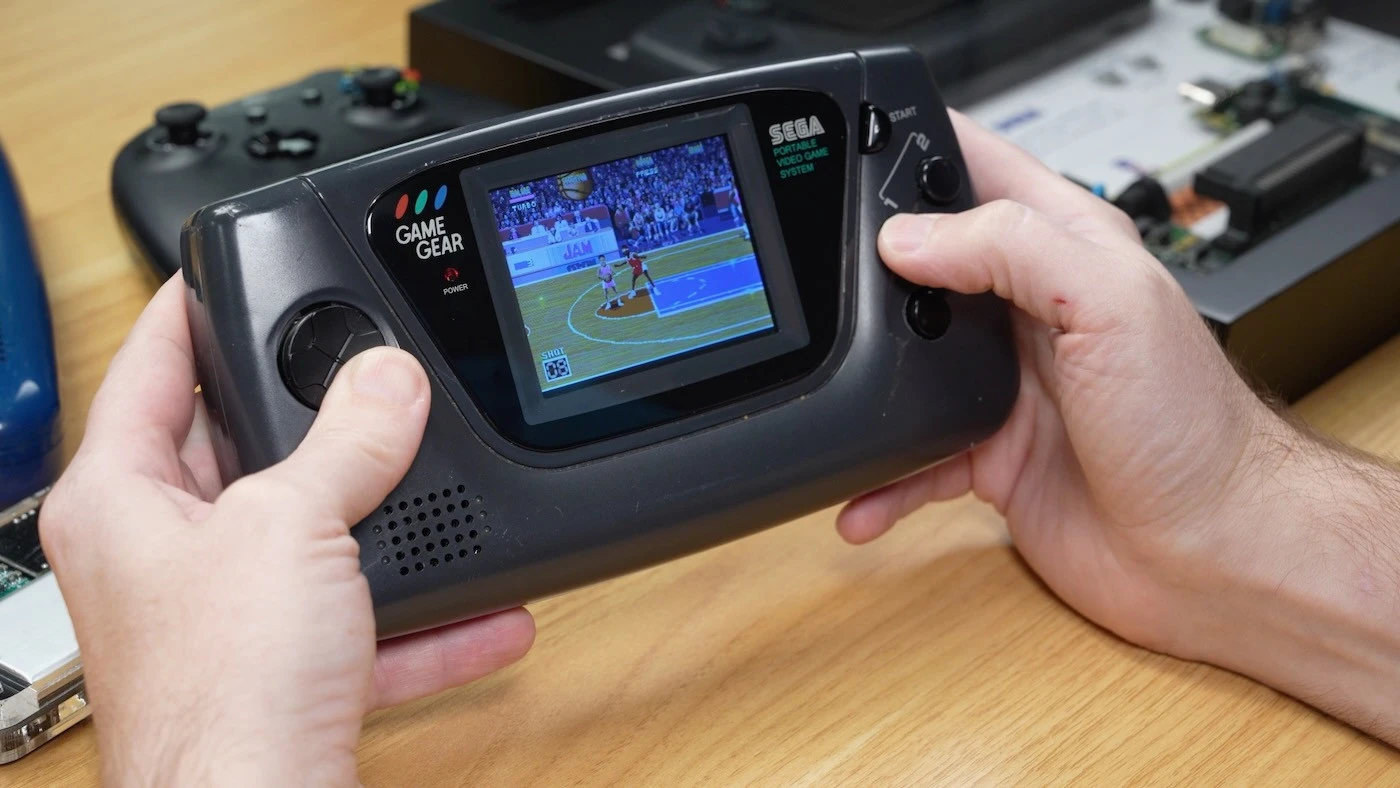
Flip both consoles over and the difference that actually mattered is a battery compartment. The Game Gear's colour backlit screen drained six AA batteries in three to five hours; the Game Boy's simpler screen ran for around thirty hours on four batteries. This was way, way before rechargeable AA batteries were common or cheap, and unlike a Steam Deck or Lenovo Legion Go you couldn't just plug a USB-C charger into the devices and carry on playing forever. If you were to play on the Game Gear the way most teens use their phones today you'd be burning through 6 batteries a day...
Nintendo shipped every Game Boy with a copy of Tetris had a far deeper game library. When the sales numbers finally settled, the Game Boy had sold roughly ten times as many units as the Game Gear. A reverse-engineering teardown explains why immediately: the "better" screen was a real strength on a spec sheet and a real weakness in a child's backpack on a road trip, exactly the kind of finding SWOT and benchmarking are built to surface, and lab testing alone would never have caught it.
If you're interested in learning more about the Game Gear, check out Jeff Geerling's excellent article and video about restoring one with a Raspberry Pi.